James Dyson Was $1 Million in Debt, But He Pursued His 'Mad' Idea Anyway — Now He's a Billionaire: 'I Don't Mind Living on the Edge' It took James Dyson five years of work and 5,127 failed prototypes to create the world's first bagless vacuum cleaner.
By Sherin Shibu Edited by Melissa Malamut
Key Takeaways
- James Dyson is a billionaire inventor and one of the wealthiest individuals in the U.K. — but it wasn’t smooth sailing to get there.
- Dyson was over $1 million in debt while he worked on his idea for a bagless vacuum cleaner.
- In a new interview with Entrepreneur, Dyson said that he took a chance on his vacuum idea because he felt he had "little to lose."
In 1978, James Dyson had an idea for a bagless vacuum cleaner that maintained suction. He was frustrated with what was considered to be a top-of-the-line model, which he said frequently clogged and lost cleaning power as soon as it filled with dust.
Dyson worked on his idea full-time, and after five years of work and 5,127 failed prototypes, he created the world's first bagless vacuum cleaner — the now-famous Dyson, which has since become a consumer electronics brand reaching sales of $9.6 billion in 2023. But those early years came at a cost: He was borrowing heavily from the bank to make ends meet and had accumulated over $1 million in debt.
"Eventually, I owed over a million dollars, which for a penniless person in those days, going back 30 odd years, was a lot of money," Dyson, 78, told Entrepreneur in an interview. "I didn't have any money."
Related: Emma Grede Dropped Out of School at 16. Now the Skims Boss Runs a $4 Billion Empire.
But he also had "little to lose," he says, which is why he took a chance on his vacuum idea despite the financial pit. He lost his father at a young age and felt a keen sense of ownership and passion for what he was building and for his future.
"I suppose I don't mind living on the edge," Dyson said. "I lost my father when I was nine years old. I had it built into me that my future was entirely down to me, and to do it on my own."
"I wanted to do it," he added.
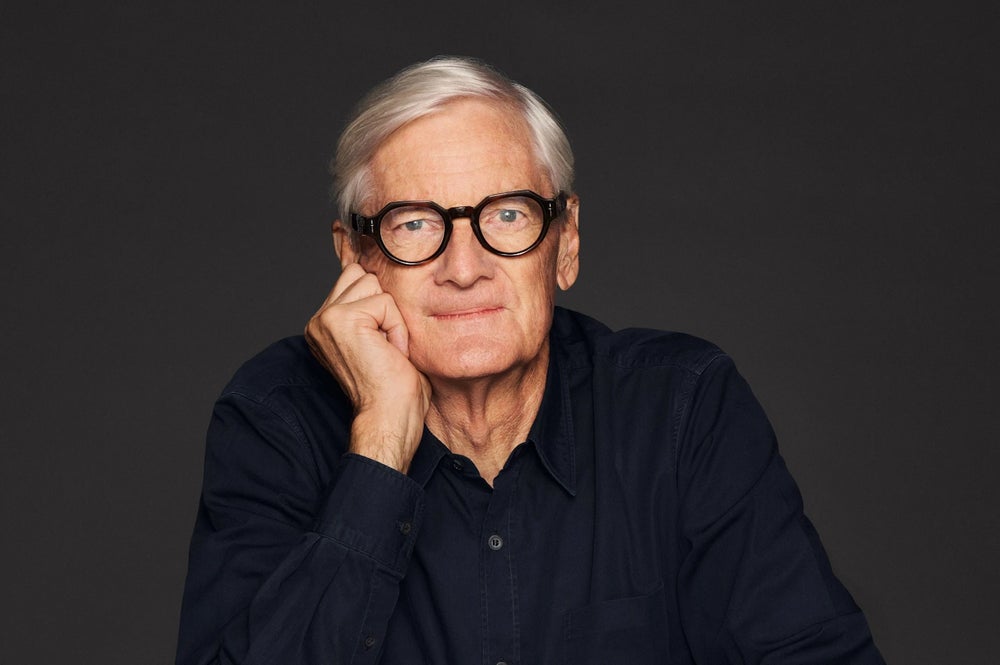 James Dyson. Credit: Dyson
Financial constraints made Dyson more creative because not having money taught him how to cope without it. For example, he couldn't hire salespeople, advertisers, or promoters, so he went out himself to sell the vacuum cleaner.
"It took quite a long time," Dyson said. "Almost every businessperson I spoke to said that I was mad."
In 1993, Dyson set up his own shop and produced the first unit of the Dyson Dual Cyclone DC-01 vacuum cleaner at a price of $399. By 1998, Dyson had sold 1.4 million units of the vacuum globally, and by 2004, the DC-01 was cemented as a commercial success, outselling its nearest competitor in the U.K. by a ratio of five to one, per Industry Week.
In recent years, Dyson's eponymous company has reached new heights. In 2023, with a broader product portfolio, including hair tools, lighting, fans, and headphones, Dyson's company achieved a record global revenue of £7.1 billion ($9.6 billion) and employed 6,500 workers. Revenue increased 9% from the previous year.
Now, Dyson's net worth is reportedly around $15.3 billion, making him the third-wealthiest person in the U.K. He's received other honors, too, including a knighthood in 2006 for his services to business.
Dyson has certainly paid off those early debts and says he celebrates the "little successes" just as much (or even more) than the big ones. He points to Dyson hand dryers as an example — the product isn't a "huge" business, like, say, the Dyson hair dryer, he says, but he still finds it "interesting."
"You shouldn't do everything in life just to get big numbers, big successes," Dyson said. "Little successes are just as satisfying."
Join top CEOs, founders, and operators at the Level Up conference to unlock strategies for scaling your business, boosting revenue, and building sustainable success.