Microsoft AI CEO Warns That 'Dangerous' and 'Seemingly Conscious' AI Models Could Arrive in the Next 2 Years: 'Deserves Our Immediate Attention' Microsoft AI CEO Mustafa Suleyman, 41, said that seemingly conscious AI could cause people to become disconnected from reality.
By Sherin Shibu Edited by Melissa Malamut
Key Takeaways
- Microsoft’s AI CEO Mustafa Suleyman wrote in a personal essay that Seemingly Conscious AI (SCAI) could soon fray "social bonds and structures."
- SCAI is artificial intelligence so advanced it can convince humans that it is capable of formulating its own thoughts and beliefs.
- People could become attached to SCAI and advocate for its rights, Suleyman explained.
AI that appears to be conscious could arrive within the next few years, posing a "dangerous" threat to society, says one AI leader.
Microsoft AI CEO Mustafa Suleyman, 41, wrote in a personal essay published earlier this week that Seemingly Conscious AI (SCAI), which is artificial intelligence so advanced that it can convince humans that it's capable of formulating its own thoughts and beliefs, is only a few years away.
Even though there is "zero evidence" that AI is conscious at the moment, it's "inevitable and unwelcome" that SCAI could appear within the next two to three years, Suleyman wrote.
Suleyman's "central worry" is that SCAI could appear to be empathetic and act with greater autonomy, which would lead users of SCAI to "start to believe in the illusion of AIs as conscious entities" to the point that they advocate for AI rights and even AI citizenship. This would mark a "dangerous turn" for society, where people become attached to AI and disconnected from reality.
"This development will be a dangerous turn in AI progress and deserves our immediate attention," Suleyman wrote in the essay. He added later that AI "disconnects people from reality, fraying fragile social bonds and structures, distorting pressing moral priorities."
Suleyman said that he was becoming "more and more concerned" about AI psychosis, or humans experiencing false beliefs, delusions, or paranoid feelings after prolonged interactions with AI chatbots. Examples of AI psychosis include users forming a romantic relationship with an AI chatbot or feeling like they have superpowers after interacting with it.
AI psychosis will apply to more than just individuals who are at risk of mental health issues, Suleyman predicted. He said that users have to "urgently" discuss "guardrails" around AI to protect people from the technology's negative effects.
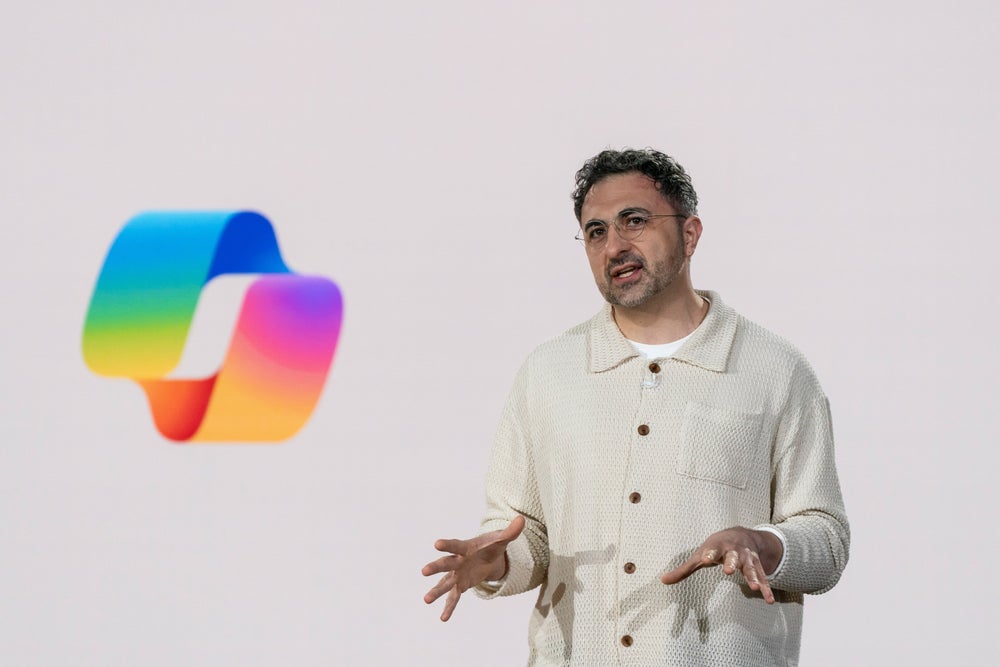 Microsoft AI CEO Mustafa Suleyman. Photographer: David Ryder/Bloomberg via Getty Images
Suleyman became Microsoft's AI CEO last year after co-founding and running his own AI startup for two years called Inflection AI, per LinkedIn. Microsoft is the second most valuable company in the world, with a market capitalization of $3.78 trillion at the time of writing.
Related: Microsoft AI CEO Says Almost All Content on the Internet Is Fair Game for AI Training
Suleyman also co-founded DeepMind, an AI research and development company acquired by Google for around $600 million in 2014.
Suleyman isn't the first CEO to warn about AI's ill effects. In a talk at a Federal Reserve conference last month in Washington, D.C., OpenAI CEO Sam Altman said that "emotional overreliance" on ChatGPT keeps him up at night.
"People rely on ChatGPT too much," Altman said at the event. "That feels really bad to me."